Dear all hands
Not for long time ago, pakistan navy receiver brand new fast missile boat from china. This boat has 64 m in long and equipped with C802 anti ship missile , also from chinesse. This fast missile boat is part of three fast missile boat that pakistan ordered from china. First and second fast missile boat is build in china shipyard ant the last fast missile boat is build in karachi ,pakistan.
This fast missile boat is show the increase of pakistan and chinese relationship specially in defence cooperation.
Showing posts with label china. Show all posts
Showing posts with label china. Show all posts
US and China increase their defence cooperation with Indonesia
DENPASAR, Indonesia -- In the tussle for influence in Southeast Asia, the United States and China have long been competing for Indonesia's affections. The strategically positioned, resource-rich archipelago is a prized partner in an era of fuel shortages and the global war on terror. But Washington and Beijing have lately expanded their courtship of Jakarta from the traditional areas of trade agreements, foreign direct investment, market access and technical assistance, to increasingly include offers of military hardware and military cooperation.
This three-way dance began in 2005, when China and Indonesia announced their "Strategic Partnership." At the same time, the U.S. partly normalized military-to-military ties with Indonesia after an embargo imposed in the 1990s due to the human rights abuses in East Timor by the Indonesian military (TNI).
Beijing took an early lead in this race for influence. The Indonesia-China Strategic Partnership marked a breakthrough in the relationship between the two giant neighbors and sent alarm bells ringing in Washington. The agreement sought to expand the political, cultural and military-security aspects of the bilateral relationship. In terms of the latter, in particular, it committed the two countries to developing each other's defense industries, establishing a defense consultation mechanism, and increasing cooperation between their law enforcement and intelligence agencies in the fight against transnational security threats.
In July 2005, Indonesian President Susilo Bambang Yudhoyono visited Beijing and signed a memorandum of understanding on defense technology cooperation for the development of short- and medium-range missiles. Jakarta also placed a $11 million order for YJ-82/C-802 anti-ship missiles.
In 2006, Indonesia-China Defense Security Consultation talks were inaugurated, causing significant concern in Washington. The warming ties between Jakarta and Beijing led to two Chinese warships visiting Indonesia in March 2007, the first such visit in more than 12 years.
A draft agreement on defense cooperation was then signed in the second Defense Security Consultation Talks a month later, covering defense technology cooperation, exchange of military students and the possibility of further arms sales to Indonesia.
In January 2008, the two countries further agreed to cooperate in the joint production of military transport vehicles and aircraft, to be developed by the two countries' state-owned defense industries. The same year, China's NORINCO and Indonesia's Pindad signed a deal to jointly develop rocket launchers and accompanying ammunition. An agreement was also reached on setting up a TNI-PLA cooperation committee, with a view to arranging joint military and training exercises.
China's charm offensive, however, has led to little tangible results, as the Jamestown Foundation's China Brief argued last year. For all the talks, no contractual production agreements have been signed thus far. Sino-Indonesian military exchanges have also been limited, and no more large orders of Chinese-manufactured military hardware have been placed by Jakarta.
One potential explanation for the slowdown is the United States' renewed efforts to restore relations with Indonesia. Though the groundwork had been laid in previous years, the speed with which the U.S. moved to regain the upper hand in the contest for Jakarta's sympathies over the last 12 months has been quite remarkable.
In March 2010, a U.S. Air Force technical team carried out critical in-country safety and maintenance reviews of the Indonesian air force's of U.S.-built aircraft. This was followed by the signing in early June of a wide-ranging agreement -- the Framework Arrangement on Cooperative Activities in the Field of Defense -- intended to integrate existing defense collaboration between the two countries, according to a press release from the U.S. Embassy in Indonesia.
The same month, U.S. Ambassador to Indonesia Cameron R. Hume inaugurated a $56 million program to fund production of coastal and shipboard radar systems at the Batam Regional Maritime Command Center. The systems included 16 coastal radars, 11 shipboard radars, one set of headquarters equipment and two regional command centers, according to information on the official Web site of the U.S. embassy.
In July, the U.S. Embassy in Jakarta told Jane's that it was processing a range of Indonesian requests for services and equipment from the U.S. Department of Defense. It also indicated that Washington intended to position itself as a key military supplier to Indonesia.
Just what that meant became clearer when Indonesia Defense Minister Purnomo Yusgiantoro expressed Jakarta's intention to buy U.S.-built F-16 and C-130H Hercules aircraft during a bilateral meeting with U.S. Secretary of Defense Robert Gates in Jakarta on July 22. The purchase would be funded by the Foreign Military Financing (FMF) program, a U.S. grant provided to foreign governments to fund the purchase of U.S.-made weapons, services and training.
After the lifting of the U.S. military embargo, Indonesia received nearly $1 million in FMF funds in 2006. That has climbed to $20 million this year.
While in Jakarta, Gates also announced that Washington had lifted its ban on cooperation with Kopassus, the TNI's controversial special forces. The restriction had been the last remaining embargo on bilateral military-to-military ties.
But Washington's reversal of fortune does not mean that Beijing is accepting defeat. China has designated 2010, "The Year of China-Indonesia Friendship," to mark the 60th anniversary of the establishment of diplomatic relations. High-ranking Chinese officials have already traveled to Jakarta this year to propose, among other things, the establishment of a joint council to facilitate increased levels of joint military production. Beijing has also offered additional C-802 anti-ship missiles as well as a range of naval vessels.
While Jakarta is considering its options, there are rumors that Yudhoyono may ask for an increase in Indonesia's FMF allocation when U.S. President Barack Obama visits Indonesia later this year. Against such a backdrop, Obama -- who spent part of his childhood in Indonesia -- will find it difficult to refuse.
Fabio Scarpello is the Southeast Asia correspondent for the Italian news agency Adnkronos International. He is based in Denpasar, Indonesia.
China launched Military reconnaissance satellite launched
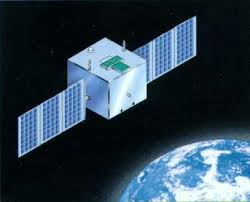
Military reconnaissance satellite launched by China
BY STEPHEN CLARK
SPACEFLIGHT NOW
Posted: March 5, 2010
Bookmark and Share
China successfully launched another Earth observation satellite from the Jiuquan space base Friday, according to state-run media outlets.
The Yaogan 9 spacecraft blasted off from Jiuquan on a Long March 4C rocket at 0455 GMT (11:55 p.m. EST Thursday), or 12:55 p.m. local time. The three-stage rocket successfully delivered the secret payload to orbit, the state-owned Xinhua news agency reported.
The Jiuquan launch site is located in the Gobi desert near the border between China's Gansu and Inner Mongolia provinces. Jiuquan has hosted the launches of all three Chinese human spaceflights to date.
Yaogan 9 is the newest member of a series of satellites believed to harbor optical and radar military reconnaissance capabilities.
The satellite "would be used to conduct scientific experiment[s], carry out surveys on land resources, forecast grain output and help with natural disaster-reduction and prevention endeavor[s]," state media reports said.
But most experts believe the Yaogan series includes two variants with high-resolution electro-optical cameras and cloud-piercing radars designed to see targets through inclement weather or darkness.
In the past, optical Yaogan satellites launched from Jiuquan and radar-equipped spacecraft were shot into orbit from the Taiyuan space center in northern China's Shanxi province.
Before Friday's mission, analysts believed China had orbited three electro-optical Yaogan satellites and five radar payloads.
Previous Yaogan launches from Jiuquan used the less powerful Long March 2D booster. The Long March 4C launched Friday includes a restartable third stage to increase payload performance. Chinese officials did not address the change in rocket, but the more powerful launcher could indicate the mission carried an upgraded Yaogan satellite.
Official Chinese media did not announce the launch until Thursday, a typical communications procedure for closely-guarded military space missions.
Friday's launch was the second orbital flight of Chinese rockets this year, and it marked the ninth space launch to reach orbit worldwide so far in 2010.
src:http://www.spaceflightnow.com/news/n1003/05longmarch/
BY STEPHEN CLARK
SPACEFLIGHT NOW
Posted: March 5, 2010
Bookmark and Share
China successfully launched another Earth observation satellite from the Jiuquan space base Friday, according to state-run media outlets.
The Yaogan 9 spacecraft blasted off from Jiuquan on a Long March 4C rocket at 0455 GMT (11:55 p.m. EST Thursday), or 12:55 p.m. local time. The three-stage rocket successfully delivered the secret payload to orbit, the state-owned Xinhua news agency reported.
The Jiuquan launch site is located in the Gobi desert near the border between China's Gansu and Inner Mongolia provinces. Jiuquan has hosted the launches of all three Chinese human spaceflights to date.
Yaogan 9 is the newest member of a series of satellites believed to harbor optical and radar military reconnaissance capabilities.
The satellite "would be used to conduct scientific experiment[s], carry out surveys on land resources, forecast grain output and help with natural disaster-reduction and prevention endeavor[s]," state media reports said.
But most experts believe the Yaogan series includes two variants with high-resolution electro-optical cameras and cloud-piercing radars designed to see targets through inclement weather or darkness.
In the past, optical Yaogan satellites launched from Jiuquan and radar-equipped spacecraft were shot into orbit from the Taiyuan space center in northern China's Shanxi province.
Before Friday's mission, analysts believed China had orbited three electro-optical Yaogan satellites and five radar payloads.
Previous Yaogan launches from Jiuquan used the less powerful Long March 2D booster. The Long March 4C launched Friday includes a restartable third stage to increase payload performance. Chinese officials did not address the change in rocket, but the more powerful launcher could indicate the mission carried an upgraded Yaogan satellite.
Official Chinese media did not announce the launch until Thursday, a typical communications procedure for closely-guarded military space missions.
Friday's launch was the second orbital flight of Chinese rockets this year, and it marked the ninth space launch to reach orbit worldwide so far in 2010.
src:http://www.spaceflightnow.com/news/n1003/05longmarch/
China : China increase their budget defense almost 7%
BEIJING — China on Thursday announced its smallest increase in defense spending in more than two decades, a likely result of both financial constraints and growing concern over perceptions of Beijing as a regional military threat.
The planned 7.5 percent boost in defense spending in 2010 follows at least 20 years of double-digit increases in the budget for the People's Liberation Army — the world's largest standing military with more than 2.3 million members.
Rapid military modernization and the acquisition of cutting-edge jet fighters, warships and submarines have aroused suspicions in Washington, Tokyo, New Delhi and elsewhere over China's intentions, further fueled by Beijing's growing diplomatic assertiveness and booming economic might.
The increase will be used to enhance China's ability "to meet various threats," said Li Zhaoxing, spokesman for China's parliament, the National People's Congress, at a news conference held on the eve of the opening of its annual legislative session.
"China is committed to peaceful development and a military posture that is defensive in nature," Li said.
He said this year's defense budget of 532.11 billion yuan ($77.9 billion) remained relatively low, particularly in relation to the country's vast territory and population. Li said Chinese defense spending has accounted for about 1.4 percent of gross domestic product in recent years, as opposed to more than 4 percent in the United States and more than 2 percent in Britain, France and Russia.
The increase over actual military spending in 2009 was 37.12 billion yuan, Li said. Defense expenditures account for 6.3 percent of China's total budget, a decline from previous years, he said.
Officials say about one-third of China's spending goes to salaries and improving living conditions for soldiers, with the rest split between replacing equipment and military research and development.
However, many overseas analysts believe the official figure accounts for only a part of actual military spending, with estimates on the total amount ranging up to twice or more what Beijing claims.
Figures provided by China's Cabinet show the country's last single-digit percentage in defense spending was in the 1980s.
The smaller rise in spending is due in part to the hit China's economy, especially the crucial export sector, has taken from the global financial crisis, prompting the government to rein in some expenditures, said Ni Lexiong, a defense analyst at Shanghai University of Political Science and Law.
Meanwhile, the leadership has realized that large increases are generating concern and suspicion among China's neighbors, potentially sparking an arms race, he said.
"The decline shows that China does not want to be seen as an aggressive military power," Ni said.
Thursday's announcement follows repeated protests recently by Beijing over the U.S. sale of weaponry to Taiwan. Those sales are driven by threats from China to use force to bring the island under its control, backed up by an estimated 1,300 Chinese ballistic missiles positioned along the Taiwan Strait.
Communist-ruled China split with Taiwan amid civil war in 1949 and continues to regard the self-governing democracy as part of its territory. Beijing has warned of a disruption in ties with Washington if the sale goes ahead, but has not said what specific actions it would take.
Li, the congress spokesman, accused some foreign countries of backing Taiwan to thwart China, calling that unacceptable interference in China's internal affairs.
Washington's announcement in January that it intended to sell Taiwan $6.4 billion in helicopters, air defense missiles and other military hardware was especially unwelcome because it came amid a warming trend in Beijing's relations with the island, he said.
Taiwan relations are less a factor in Beijing's defense spending than economic stress and worries about appearing overly aggressive, said defense scholar Wang Kun-yi of Taipei's Tamkung University.
"China's defense budget is not specifically linked to cross-strait developments, but rather it is more related to the country's global positioning," Wang said.
Defense spending is among budget items to be approved at the end of the National People's Congress' session, which begins Friday and runs through March 14.
This year's session is expected to see a shift in spending priorities toward affordable housing, education, health care and other social programs.
Li said the full assembly this year would amend a law on how deputies are selected, correcting a disparity that gave urban Chinese greater representation than their more numerous rural neighbors.
(Associated Press)
The planned 7.5 percent boost in defense spending in 2010 follows at least 20 years of double-digit increases in the budget for the People's Liberation Army — the world's largest standing military with more than 2.3 million members.
Rapid military modernization and the acquisition of cutting-edge jet fighters, warships and submarines have aroused suspicions in Washington, Tokyo, New Delhi and elsewhere over China's intentions, further fueled by Beijing's growing diplomatic assertiveness and booming economic might.
The increase will be used to enhance China's ability "to meet various threats," said Li Zhaoxing, spokesman for China's parliament, the National People's Congress, at a news conference held on the eve of the opening of its annual legislative session.
"China is committed to peaceful development and a military posture that is defensive in nature," Li said.
He said this year's defense budget of 532.11 billion yuan ($77.9 billion) remained relatively low, particularly in relation to the country's vast territory and population. Li said Chinese defense spending has accounted for about 1.4 percent of gross domestic product in recent years, as opposed to more than 4 percent in the United States and more than 2 percent in Britain, France and Russia.
The increase over actual military spending in 2009 was 37.12 billion yuan, Li said. Defense expenditures account for 6.3 percent of China's total budget, a decline from previous years, he said.
Officials say about one-third of China's spending goes to salaries and improving living conditions for soldiers, with the rest split between replacing equipment and military research and development.
However, many overseas analysts believe the official figure accounts for only a part of actual military spending, with estimates on the total amount ranging up to twice or more what Beijing claims.
Figures provided by China's Cabinet show the country's last single-digit percentage in defense spending was in the 1980s.
The smaller rise in spending is due in part to the hit China's economy, especially the crucial export sector, has taken from the global financial crisis, prompting the government to rein in some expenditures, said Ni Lexiong, a defense analyst at Shanghai University of Political Science and Law.
Meanwhile, the leadership has realized that large increases are generating concern and suspicion among China's neighbors, potentially sparking an arms race, he said.
"The decline shows that China does not want to be seen as an aggressive military power," Ni said.
Thursday's announcement follows repeated protests recently by Beijing over the U.S. sale of weaponry to Taiwan. Those sales are driven by threats from China to use force to bring the island under its control, backed up by an estimated 1,300 Chinese ballistic missiles positioned along the Taiwan Strait.
Communist-ruled China split with Taiwan amid civil war in 1949 and continues to regard the self-governing democracy as part of its territory. Beijing has warned of a disruption in ties with Washington if the sale goes ahead, but has not said what specific actions it would take.
Li, the congress spokesman, accused some foreign countries of backing Taiwan to thwart China, calling that unacceptable interference in China's internal affairs.
Washington's announcement in January that it intended to sell Taiwan $6.4 billion in helicopters, air defense missiles and other military hardware was especially unwelcome because it came amid a warming trend in Beijing's relations with the island, he said.
Taiwan relations are less a factor in Beijing's defense spending than economic stress and worries about appearing overly aggressive, said defense scholar Wang Kun-yi of Taipei's Tamkung University.
"China's defense budget is not specifically linked to cross-strait developments, but rather it is more related to the country's global positioning," Wang said.
Defense spending is among budget items to be approved at the end of the National People's Congress' session, which begins Friday and runs through March 14.
This year's session is expected to see a shift in spending priorities toward affordable housing, education, health care and other social programs.
Li said the full assembly this year would amend a law on how deputies are selected, correcting a disparity that gave urban Chinese greater representation than their more numerous rural neighbors.
(Associated Press)
Pakistan has extended defence ties with Indonesia and China
CN-235 of the Pakistan Air Force (photo : XAirforces)
Pakistan has extended defence ties with Indonesia and China as part of its strategy to diversify military suppliers and industrial co-operation partners.
Statements issued by the Pakistan government on 25 and 26 February said that meetings between Pakistan defence officials and representatives from Indonesia and China would strengthen strategic relations.
The focus of meetings between Indonesian and Pakistani defence officials in Islamabad on 25 February centred on "resolving maintenance problems" with the CN-235 transport aircraft that the Pakistan Air Force purchased from Jakarta in 2004. Closer industrial collaboration on other projects was also discussed, said the statement.
Talks with Chinese officials took place in Beijing a day later as part of the 30th anniversary of the formation of state-owned Chinese defence prime China North Industries Group (Norinco).
A statement said that Pakistan and Norinco had entered "joint venture and joint production projects" in recent years, such as the production of the Al Khalid main battle tank.
Masood Khan, Pakistan's ambassador to China, said that Pakistan and Norinco were also "investing into areas of exploitation of mineral resources, petroleum, defence products, marketing, and research and development".
Pakistan's ties with Indonesia are indicative of an emerging trend that has seen Islamabad establish close defence relations with a number of largely predominantly Muslim nations over the past few years. Similar ties have been forged with Brunei, Jordan, Malaysia, Turkey, Uzbekistan and Yemen.
China, meanwhile, remains Pakistan's closest industrial partner with joint collaboration continuing on a number of platforms, including the Al Khalid tank, the JF-17 fighter and F-22P frigates.
Defence diversification is regarded as an important defence strategy in Islamabad because it remains wary of its relationship with the US, from which it currently procures the majority of defence equipment. The US has previously imposed sanctions on Pakistan throughout the 1960s and again in the 1990s.
Pakistan has extended defence ties with Indonesia and China as part of its strategy to diversify military suppliers and industrial co-operation partners.
Statements issued by the Pakistan government on 25 and 26 February said that meetings between Pakistan defence officials and representatives from Indonesia and China would strengthen strategic relations.
The focus of meetings between Indonesian and Pakistani defence officials in Islamabad on 25 February centred on "resolving maintenance problems" with the CN-235 transport aircraft that the Pakistan Air Force purchased from Jakarta in 2004. Closer industrial collaboration on other projects was also discussed, said the statement.
Talks with Chinese officials took place in Beijing a day later as part of the 30th anniversary of the formation of state-owned Chinese defence prime China North Industries Group (Norinco).
A statement said that Pakistan and Norinco had entered "joint venture and joint production projects" in recent years, such as the production of the Al Khalid main battle tank.
Masood Khan, Pakistan's ambassador to China, said that Pakistan and Norinco were also "investing into areas of exploitation of mineral resources, petroleum, defence products, marketing, and research and development".
Pakistan's ties with Indonesia are indicative of an emerging trend that has seen Islamabad establish close defence relations with a number of largely predominantly Muslim nations over the past few years. Similar ties have been forged with Brunei, Jordan, Malaysia, Turkey, Uzbekistan and Yemen.
China, meanwhile, remains Pakistan's closest industrial partner with joint collaboration continuing on a number of platforms, including the Al Khalid tank, the JF-17 fighter and F-22P frigates.
Defence diversification is regarded as an important defence strategy in Islamabad because it remains wary of its relationship with the US, from which it currently procures the majority of defence equipment. The US has previously imposed sanctions on Pakistan throughout the 1960s and again in the 1990s.
India's missile tech a decade behind that of China
'India's missile tech a decade behind that of China'
PTI, 14 February 2010, 06:03pm IST
Text Size:
|
Topics:
* China
* India
* Missile
BEIJING: Despite India's advances in missile technology, the country is still a decade behind China, a top Chinese defence analyst has claimed
Twitter Facebook Share
Email Print Save Comment
and asserted that Beijing does not view New Delhi as its "strategic rival."
Shrugging off concerns that newer versions of India's Agni missiles could strike the northernmost tips of China, the state-run Global Times, quoting a top analyst said India may take five more years to achieve this capability.
The analyst also dismissed the claims that India is far ahead of China in developing interceptor technology, the paper said this week, days after India tested the Agni- III, which has a 3,500 km range.
Chinese Rear Admiral Zhang Zhaozhong, a professor at the prestigious Chinese National Defence University, said India is still 10 to 15 years behind China in terms of missile technology.
"It's still unknown when the Agni-III will be deployed by the Indian army, though they claim the missile is ready for use. And it might take at least another five years to ready the Agni-V," Zhang was quoted as saying.
He also claimed that China did not see India as a strategic rival, and developed weapons to counter it.
"In developing its military technology, China has never taken India as a strategic rival, and none of its weapons were specifically designed to contain India," the Global Times quoted Zhang as saying.
"After Agni III and Agni V, as far as cities in China and Pakistan are concerned, there will be no target that we want to hit but can't hit," DRDO chief V K Saraswat had said.
Earlier this week, Chinese foreign ministry spokesman Ma Zhaoxu had described China's ties with India as "friendly and cooperative" and said both countries did not pose mutual threat.
"I don't want to interpret or comment on the reports," Ma said when asked to comment on the February seven launch of Agni-III which put China's major cities within its strike range.
"The China-India relation is friendly and cooperative. China will not be a threat to India, and nor will India pose a threat to China," Ma said.
India is set to test within a year an Agni-V nuclear- capable missile with a range of more than 5,000 kilometres, Saraswat, had said.
"We feel our accuracy is better than China's DF 21," Saraswat had said of the Agni-III, which was test launched on February 7.
The DF-21 is China's mid-range missile that debuted in 1999, along with its intercontinental ballistic missile, the DF- 31, which the army utilises.
Zhang also dismissed Saraswat's assertion that India was ahead of China in the area of ballistic missile defence (BMD).
Zhang said the BMD accounts for only part of India's interception system, which also encompasses early-warning and guidance.
"India's technology for its measurement and control system, which is used to trace launched missiles, remains at a very low level, and they are unable to constitute a complete and reliable missile defense system," Zhang claimed.
Beijing test-fired its first missile interception system last month, and successfully tested its anti-satellite system in 2007.
The United States and Russia are the only two countries that have actually deployed missile-interceptor technology.
Follow us on Twitter for TOI top stories
source: time india
PTI, 14 February 2010, 06:03pm IST
Text Size:
|
Topics:
* China
* India
* Missile
BEIJING: Despite India's advances in missile technology, the country is still a decade behind China, a top Chinese defence analyst has claimed
Twitter Facebook Share
Email Print Save Comment
and asserted that Beijing does not view New Delhi as its "strategic rival."
Shrugging off concerns that newer versions of India's Agni missiles could strike the northernmost tips of China, the state-run Global Times, quoting a top analyst said India may take five more years to achieve this capability.
The analyst also dismissed the claims that India is far ahead of China in developing interceptor technology, the paper said this week, days after India tested the Agni- III, which has a 3,500 km range.
Chinese Rear Admiral Zhang Zhaozhong, a professor at the prestigious Chinese National Defence University, said India is still 10 to 15 years behind China in terms of missile technology.
"It's still unknown when the Agni-III will be deployed by the Indian army, though they claim the missile is ready for use. And it might take at least another five years to ready the Agni-V," Zhang was quoted as saying.
He also claimed that China did not see India as a strategic rival, and developed weapons to counter it.
"In developing its military technology, China has never taken India as a strategic rival, and none of its weapons were specifically designed to contain India," the Global Times quoted Zhang as saying.
"After Agni III and Agni V, as far as cities in China and Pakistan are concerned, there will be no target that we want to hit but can't hit," DRDO chief V K Saraswat had said.
Earlier this week, Chinese foreign ministry spokesman Ma Zhaoxu had described China's ties with India as "friendly and cooperative" and said both countries did not pose mutual threat.
"I don't want to interpret or comment on the reports," Ma said when asked to comment on the February seven launch of Agni-III which put China's major cities within its strike range.
"The China-India relation is friendly and cooperative. China will not be a threat to India, and nor will India pose a threat to China," Ma said.
India is set to test within a year an Agni-V nuclear- capable missile with a range of more than 5,000 kilometres, Saraswat, had said.
"We feel our accuracy is better than China's DF 21," Saraswat had said of the Agni-III, which was test launched on February 7.
The DF-21 is China's mid-range missile that debuted in 1999, along with its intercontinental ballistic missile, the DF- 31, which the army utilises.
Zhang also dismissed Saraswat's assertion that India was ahead of China in the area of ballistic missile defence (BMD).
Zhang said the BMD accounts for only part of India's interception system, which also encompasses early-warning and guidance.
"India's technology for its measurement and control system, which is used to trace launched missiles, remains at a very low level, and they are unable to constitute a complete and reliable missile defense system," Zhang claimed.
Beijing test-fired its first missile interception system last month, and successfully tested its anti-satellite system in 2007.
The United States and Russia are the only two countries that have actually deployed missile-interceptor technology.
Follow us on Twitter for TOI top stories
source: time india
N-tipped Agni-V first india intercontinental ballistic missile can hit China and pakistan
NEW DELHI: Brimming with confidence after last week's successful Agni-III test, India now hopes to test its first-ever intercontinental ballistic
missile (ICBM) within a year. This nuclear-capable Agni-V missile will be able to hit even northernmost China.
Moreover, in the backdrop of Beijing testing anti-satellite (ASAT) weapons and ballistic missile defence (BMD) systems, DRDO chief V K Saraswat on Wednesday said India already had the 'building blocks' for ASAT weapons and was far ahead of China in the BMD arena.
DRDO, in fact, will conduct the fourth test of its two-tier BMD system, designed to track and destroy hostile missiles both inside (endo) and outside (exo) the earth's atmosphere, towards end-March/early-April. But all eyes are now on Agni-V, which with a range of over 5,000-km can arguably be called an ICBM, usually used to denote a missile capable of hitting targets over 5,500 km away.
Why is India not developing true-blue ICBMs, especially since Chinese missiles like Dong Feng-31A have a range of 11,200-km?
"We have the capability. But the missile's range and lethality is based on the immediate objective of threat mitigation. Agni-V suits our present requirements," said Saraswat.
Being designed by adding a third composite stage to the two-stage 3,500-km Agni-III, the 17.5-metre tall Agni-V will be a canister-launch missile system to ensure it has the requisite operational flexibility to be swiftly transported and fired from anywhere. Consequently, if launched from near the Line of Actual Control, the solid-fuelled Agni-V will be able to hit China's northernmost city of Habin. Both Agni-III, which DRDO says is now 'mature' for induction, and Agni-V will add muscle to India's 'dissuasive deterrence' posture against China.
Moreover, DRDO is also developing MIRV (multiple independently targetable re-entry vehicles) warheads for Agni missiles. An MIRV payload on a missile carries several nuclear warheads, which can be programmed to hit different targets. A flurry of such missiles can hence completely overwhelm BMD systems.
But unlike China, which fired a missile to bring down a satellite in January 2007, India will not test a 'real' ASAT weapon. "It will lead to debris in space. We can simulate a test on ground using an 'electronic' satellite. We have the building blocks for it," said Saraswat.
"Agni-III's propulsion system coupled with the BMD system's 'kill vehicle' will compose an ASAT weapon. The propulsion system is adequate to carry the ASAT warhead to 1,000-km altitude," said Saraswat.
source:http://timesofindia.indiatimes.com/india/N-tipped-Agni-V-can-hit-all-of-China-Pak/articleshow/5558520.cms
China warned USA : USA arm sales to Taiwan
China's government summoned the U.S. ambassador related plan to sell weapons worth U.S. 6.5 billion dollars to Taiwan. In the summons U.S. ambassador was told the consequences of arms sales to Taiwan for China relations and American bilatereal. This added problem after the tension of the problems associated with the Internet search engine GOOGLE.
China Says Missile Defence Test a Success
12 Januari 2010
 HQ-9 (photo : Ausairpower)
China Says Missile Defence Test a Success
China announced that its military intercepted a missile in mid-flight Monday in a test of new technology that comes amid heightened tensions over Taiwan and increased willingness by the Asian giant to show off its advanced military capabilities.
The official Xinhua News Agency reported late Monday that “ground-based midcourse missile interception technology” was tested within Chinese territory.
“The test has achieved the expected objective,” the three-sentence report said. “The test is defensive in nature and is not targeted at any country.”
Monday's report follows repeated complaints in recent days by Beijing over the sale by the U.S. of weaponry to Taiwan, including PAC-3 air defence missiles. These sales are driven by threats from China to use force to bring the island under its control, backed up by an estimated 1,300 Chinese ballistic missiles positioned along the Taiwan Strait.
Communist-ruled China split with Taiwan amid civil war in 1949 and continues to regard the self-governing democracy as part of its territory. Beijing has warned of a disruption in ties with Washington if the sale goes ahead, but has not said what specific actions it would take.
China's military is in the middle of a major technology upgrade, spurred on by double-digit annual percentage increases in defence spending. Missile technology is considered one of the People's Liberation Army's particular strengths, allowing it to narrow the gap with the U.S. and other militaries that wield stronger conventional forces.
Xinhua did not further identify the system tested, although China is believed to be pursuing a number of programs developed from anti-aircraft systems aimed at shooting down stealth aircraft and downing or disabling cruise missiles and precision-guided weapons.
Such programs are shrouded in secrecy, but military analysts say China appears to have augmented its air defences with homemade technologies adapted from Russian and other foreign weaponry. China purchased a large number of Russian surface-to-air missiles during the 1990s and has since pressed ahead with its own HQ-9 interceptor, along with a more advanced missile system with an extended range.
Foreign media reports in 2006 said Beijing had tested a surface-to-air missile in the country's remote northwest with capabilities similar to the American Patriot interceptor system. According to South Korea's Dong-A Ilbo newspaper, the test involved the detection and downing of both a reconnaissance drone and an incoming ballistic missile by an interceptor, adding that it appeared to mark the official launch of China's indigenous interceptor unit.
“There is an obvious concern in Beijing that they need an effective anti-ballistic missile defence in some form,” said Hans Kristensen, an expert on the Chinese military with the Federation of American Scientists.
Staging a successful test “shows that their technology is maturing,” Mr. Kristensen said.
The 2009 Pentagon report on China's military says the air force received eight battalions of upgraded Russian SA-20 PMU-2 surface-to-air missiles since 2006, with another eight on order. The missiles have a range of 200 kilometres and reportedly provide limited ballistic and cruise missile defence capabilities.
Such interceptor missiles are believed to be deployed near major cities and strategic sites such as the massive Three Gorges Dam, but they could also be used to protect China's own ballistic missile batteries that would themselves become targets in any regional conflict.
Such interceptors would be of relatively little use against U.S. cruise missiles, although they could be effective against ballistic missiles deployed by Russia or India, China's massive neighbour to the south with which it has a growing military rivalry and lingering territorial disputes.
Monday's report continues a growing trend of greater transparency over China's new military technologies typified by last year's striking Oct. 1 military parade marking the 60th anniversary of the founding of the communist state. Large numbers of missiles were displayed in the show, including ICBMs, together with tanks, amphibious craft and latest-generation jet fighters.
China's anti-ship cruise and ballistic missiles — capable of striking U.S. Navy aircraft carrier battle groups and bases in the Pacific — have drawn the most attention from analysts in recent months.
Military displays and announcements of successful tests help build public pride in the military's rising capabilities and bolster support for rising defence spending that increased by almost 15 per cent last year to $71 billion. The figure is thought by many analysts to represent only a portion of total defence spending, although it still amounts to only a fraction of the U.S. military budget.
Meanwhile, showing off such capabilities also helps put adversaries on notice, Mr. Kristensen said.
“It's the new Chinese way to signal that they are now able to do these things,” he said.
(Associated Press/TheGlobeandMail)
HQ-9 (photo : Ausairpower)China Says Missile Defence Test a Success
China announced that its military intercepted a missile in mid-flight Monday in a test of new technology that comes amid heightened tensions over Taiwan and increased willingness by the Asian giant to show off its advanced military capabilities.
The official Xinhua News Agency reported late Monday that “ground-based midcourse missile interception technology” was tested within Chinese territory.
“The test has achieved the expected objective,” the three-sentence report said. “The test is defensive in nature and is not targeted at any country.”
Monday's report follows repeated complaints in recent days by Beijing over the sale by the U.S. of weaponry to Taiwan, including PAC-3 air defence missiles. These sales are driven by threats from China to use force to bring the island under its control, backed up by an estimated 1,300 Chinese ballistic missiles positioned along the Taiwan Strait.
Communist-ruled China split with Taiwan amid civil war in 1949 and continues to regard the self-governing democracy as part of its territory. Beijing has warned of a disruption in ties with Washington if the sale goes ahead, but has not said what specific actions it would take.
China's military is in the middle of a major technology upgrade, spurred on by double-digit annual percentage increases in defence spending. Missile technology is considered one of the People's Liberation Army's particular strengths, allowing it to narrow the gap with the U.S. and other militaries that wield stronger conventional forces.
Xinhua did not further identify the system tested, although China is believed to be pursuing a number of programs developed from anti-aircraft systems aimed at shooting down stealth aircraft and downing or disabling cruise missiles and precision-guided weapons.
Such programs are shrouded in secrecy, but military analysts say China appears to have augmented its air defences with homemade technologies adapted from Russian and other foreign weaponry. China purchased a large number of Russian surface-to-air missiles during the 1990s and has since pressed ahead with its own HQ-9 interceptor, along with a more advanced missile system with an extended range.
Foreign media reports in 2006 said Beijing had tested a surface-to-air missile in the country's remote northwest with capabilities similar to the American Patriot interceptor system. According to South Korea's Dong-A Ilbo newspaper, the test involved the detection and downing of both a reconnaissance drone and an incoming ballistic missile by an interceptor, adding that it appeared to mark the official launch of China's indigenous interceptor unit.
“There is an obvious concern in Beijing that they need an effective anti-ballistic missile defence in some form,” said Hans Kristensen, an expert on the Chinese military with the Federation of American Scientists.
Staging a successful test “shows that their technology is maturing,” Mr. Kristensen said.
The 2009 Pentagon report on China's military says the air force received eight battalions of upgraded Russian SA-20 PMU-2 surface-to-air missiles since 2006, with another eight on order. The missiles have a range of 200 kilometres and reportedly provide limited ballistic and cruise missile defence capabilities.
Such interceptor missiles are believed to be deployed near major cities and strategic sites such as the massive Three Gorges Dam, but they could also be used to protect China's own ballistic missile batteries that would themselves become targets in any regional conflict.
Such interceptors would be of relatively little use against U.S. cruise missiles, although they could be effective against ballistic missiles deployed by Russia or India, China's massive neighbour to the south with which it has a growing military rivalry and lingering territorial disputes.
Monday's report continues a growing trend of greater transparency over China's new military technologies typified by last year's striking Oct. 1 military parade marking the 60th anniversary of the founding of the communist state. Large numbers of missiles were displayed in the show, including ICBMs, together with tanks, amphibious craft and latest-generation jet fighters.
China's anti-ship cruise and ballistic missiles — capable of striking U.S. Navy aircraft carrier battle groups and bases in the Pacific — have drawn the most attention from analysts in recent months.
Military displays and announcements of successful tests help build public pride in the military's rising capabilities and bolster support for rising defence spending that increased by almost 15 per cent last year to $71 billion. The figure is thought by many analysts to represent only a portion of total defence spending, although it still amounts to only a fraction of the U.S. military budget.
Meanwhile, showing off such capabilities also helps put adversaries on notice, Mr. Kristensen said.
“It's the new Chinese way to signal that they are now able to do these things,” he said.
(Associated Press/TheGlobeandMail)
President Ma urges China to dismantle missiles targeting Taiwan
President Ma urges China to dismantle missiles targeting Taiwan
ROC Central News Agency
2010/01/04 23:34:19
Taipei, Jan. 4 (CNA) President Ma Ying-jeou on Monday repeated his call for Beijing to dismantle its missiles targeting Taiwan, saying the situation is something Taiwan's people do not feel very good about.
Ma made the call in his meeting with visiting Japanese parliamentarian Ono Yoshinori of the opposition Liberty Democratic Party at the Presidential Office.
Ma said his efforts to ease the tense stand-off between the two sides across the Taiwan Strait and seek the rapprochement between them since taking office in May 2008 has proven fruitful.
But while tensions in cross-strait ties have greatly subsided compared to before Taiwan's 2008 presidential election, Beijing has yet to move to reduce the number of missiles deployed targeting Taiwan, Ma said.
He underlined that China must withdraw its missile deployment or do something to handle the issue because Taiwan's people do not feel very good about it.
Addressing the regional security situation, Ma said he believes the relaxed stand-off between Taiwan and China could help Japan maintain its national security and regional stability.
The president also expressed the hope that Taiwan and Japan can develop closer cooperative relations on regional security.
(By Garfie Li and Elizabeth Hsu) enditem/ls
ROC Central News Agency
2010/01/04 23:34:19
Taipei, Jan. 4 (CNA) President Ma Ying-jeou on Monday repeated his call for Beijing to dismantle its missiles targeting Taiwan, saying the situation is something Taiwan's people do not feel very good about.
Ma made the call in his meeting with visiting Japanese parliamentarian Ono Yoshinori of the opposition Liberty Democratic Party at the Presidential Office.
Ma said his efforts to ease the tense stand-off between the two sides across the Taiwan Strait and seek the rapprochement between them since taking office in May 2008 has proven fruitful.
But while tensions in cross-strait ties have greatly subsided compared to before Taiwan's 2008 presidential election, Beijing has yet to move to reduce the number of missiles deployed targeting Taiwan, Ma said.
He underlined that China must withdraw its missile deployment or do something to handle the issue because Taiwan's people do not feel very good about it.
Addressing the regional security situation, Ma said he believes the relaxed stand-off between Taiwan and China could help Japan maintain its national security and regional stability.
The president also expressed the hope that Taiwan and Japan can develop closer cooperative relations on regional security.
(By Garfie Li and Elizabeth Hsu) enditem/ls
No threat to Indian skies from China: EAC chief
Kolkata: The Indian Air Force on Tuesday allayed fears of a threat from China in the eastern skies and said it was fully geared to give the necessary protection. "Personally, I don't see any aggressive postures (from China) that we need to go hyper about. We are, however, fully prepared to protect our skies. Our eastern skies are secure," Air Officer Commanding-in-Chief Air Marshal S K Bhan told a press conference on the occasion of the Eastern Air Command's (EAC) golden jubilee.
google_protectAndRun("ads_core.google_render_ad", google_handleError, google_render_ad);
Asked how many cases of violation of Indian airspace by the Chinese airforce has been recorded this year, Bhan said, "truly speaking, none to my notice. Our radars have also not picked up any such movement. I have also checked with the army and they confirmed it." He said the EAC was planning to induct more radars and upgrade the existing ones. "Besides, an Airborne Warning and Control System (AWACS) is now in the country. Whenever the need, it is available to us. If the number of the AWACS increases, some will surely find a place in our sector," Bhan said. Declining to comment on the Union Home Ministry's terror alert in Kolkata which is under EAC jurisdiction, Bhan however, said the Command was keeping constant vigil in the skies and had inducted automatic security systems for better surveillance. He also said the Air Force was willing to lend Unmanned Aerial Vehicles (UAVs) to track down Maoists in West Bengal if the state government made a request. Bhan said the Air Force was already in the process of developing Advance Landing Grounds (ALGs) in some remote areas of north-east for air maintenance activities. "We are now looking at whether there are any encroachments on the land and whether there is any need to acquire more land to expand the ALGs. These done, we will resurface runways and develop the infrastructure," he said. The ALGs were primarily for military purposes, but the Air Force was also willing to allow them to be used by civilian aircraft, Bhan said. He said the biggest challenge to the EAC was the unpredictable weather in the territory under its jurisdiction. "Therefore, there is a need to upgrade the airfields to keep them operational 365 days of the year. We cannot have modern aircraft without modern infrastructure," he added. Set up in 1959, EAC is the country's only air command to cover airspace along the border with five countries -- Nepal, Bhutan, China, Myanmar and Bangladesh. Its jurisdiction include the north-eastern states, Sikkim, West Bengal, Jharkhand, Orissa and parts of Bihar. Pointing out that air maintenance and flood relief are EAC's main peacetime activities, Bhan said since last year, he had initiated training camp for civilian relief workers and this has yielded good results, especially during the breach of the Kosi embankment last year.
google_protectAndRun("ads_core.google_render_ad", google_handleError, google_render_ad);
Asked how many cases of violation of Indian airspace by the Chinese airforce has been recorded this year, Bhan said, "truly speaking, none to my notice. Our radars have also not picked up any such movement. I have also checked with the army and they confirmed it." He said the EAC was planning to induct more radars and upgrade the existing ones. "Besides, an Airborne Warning and Control System (AWACS) is now in the country. Whenever the need, it is available to us. If the number of the AWACS increases, some will surely find a place in our sector," Bhan said. Declining to comment on the Union Home Ministry's terror alert in Kolkata which is under EAC jurisdiction, Bhan however, said the Command was keeping constant vigil in the skies and had inducted automatic security systems for better surveillance. He also said the Air Force was willing to lend Unmanned Aerial Vehicles (UAVs) to track down Maoists in West Bengal if the state government made a request. Bhan said the Air Force was already in the process of developing Advance Landing Grounds (ALGs) in some remote areas of north-east for air maintenance activities. "We are now looking at whether there are any encroachments on the land and whether there is any need to acquire more land to expand the ALGs. These done, we will resurface runways and develop the infrastructure," he said. The ALGs were primarily for military purposes, but the Air Force was also willing to allow them to be used by civilian aircraft, Bhan said. He said the biggest challenge to the EAC was the unpredictable weather in the territory under its jurisdiction. "Therefore, there is a need to upgrade the airfields to keep them operational 365 days of the year. We cannot have modern aircraft without modern infrastructure," he added. Set up in 1959, EAC is the country's only air command to cover airspace along the border with five countries -- Nepal, Bhutan, China, Myanmar and Bangladesh. Its jurisdiction include the north-eastern states, Sikkim, West Bengal, Jharkhand, Orissa and parts of Bihar. Pointing out that air maintenance and flood relief are EAC's main peacetime activities, Bhan said since last year, he had initiated training camp for civilian relief workers and this has yielded good results, especially during the breach of the Kosi embankment last year.
Subscribe to:
Posts (Atom)